

Are Massage Tools Worth It for Desk Tension?
Quick Summary
Massage tools can ease desk tension when matched to the body area that hurts most, such as a massage ball for the upper back or a foot roller for the feet. They ease symptoms but do not fix a poor desk setup, so pair them with workstation changes and regular breaks.
- Desk tension usually shows up in the neck and upper shoulders, upper back, lower back and hips, and feet.
- A peanut-shaped massage ball's groove lets you work the muscles beside the spine without pressing on bone.
- Foot rollers suit seated breaks, with the roller under the sole and a stable base.
- Test any new tool on a large muscle first and reduce pressure before moving to sensitive areas.
- Set a reminder to stand, stretch and change position roughly every hour.
Table of Contents
- Why Desk Tension Builds Up and Where It Shows
- Types of Massage Tools for Desk Workers
- Best Neck Massager for Desk Work: What to Look For
- Massage Gun for Neck and Shoulder Tension: Is It Right for You?
- Massage Ball for Upper-Back Tightness and Other Body Areas
- Desk Setup for Neck Pain: Fix the Cause Before the Tool
- Booking Your Next Step: Choosing a Movecraft Tool for Your Desk Routine
- Frequently Asked Questions
Why Desk Tension Builds Up and Where It Shows
Last Updated: November 14, 2026
Desk tension is one of the most common complaints among office workers across Australia. Hours spent hunched over a keyboard, with shoulders rising and the head drifting forward, load the same muscles day after day. Many people only notice it at the end of the afternoon, when the neck feels stiff and the shoulders ache. Understanding where that tension shows up is the first step towards choosing the right tool for it, which is why we start here before comparing massage options.
Desk tension usually appears in three areas. The neck and upper shoulders carry the most strain, especially when the screen sits too low or too far away. The upper back can tighten as posture slumps through the day. The lower back and hips often stiffen after long periods seated without a break. Feet can ache too, particularly for people who spend part of the day standing or wearing shoes all day.
Many people find that these areas feel connected, yet each one responds to different pressure and different tools. A tool that suits the upper back may not feel right on the lower back. That is why this guide looks at each body area separately.
Types of Massage Tools for Desk Workers
Several types of massage tool suit desk work, and each does a different job. The useful way to compare them is not by brand or price but by three questions: which body area you need to reach, how much control you have over the pressure, and whether the tool can realistically be used in the place where your tension actually builds up.
Massage balls. A ball gives you a small, targeted point of contact that you position by hand or against a wall. Density matters more than size: a high-density ball transmits more force into the muscle, which suits the upper back and hips but is too much for the neck.
Foot rollers and fascia wheels. A wheel or roller works the sole while you stay seated. Look for a stable base and a surface you can control with light pressure; a roller that slides on a polished floor is frustrating to use mid-task.
Acupressure mats and pillows. A textured mat with a matching pillow spreads pressure across a larger area and suits a longer wind-down rather than a quick desk break. Check the footprint before buying, a mat around 68 × 42 cm needs clear floor space, and a pillow around 37 × 15 × 10 cm is easier to store.
**
Manual hand tools and grip aids. Small hand-held rollers, knobs and grip rings let you work the forearms, hands and wrists, areas the larger tools tend to miss but which take a lot of load during keyboard and mouse work. They are silent, cheap to try and easy to keep on the desk.
A practical way to choose is to match the tool to the body area that bothers you most. Neck and upper shoulders: a small ball used gently, or a heat-and-knead pillow for rest. Upper back: a peanut ball against a wall or chair. Lower back and hips: a denser ball used on the floor. Forearms and hands: a manual hand tool or grip aid. Feet: a foot roller.
At Movecraft, the Acupressure Massage Mat With Needles, priced at $69.99 AUD, suits an evening pause with a textured mat and matching pillow. For a smaller option, the Peanut Massage Ball High Density Lightweight Fitness Body Massage Yoga Exercise Relieve Pain costs $22.00 AUD.
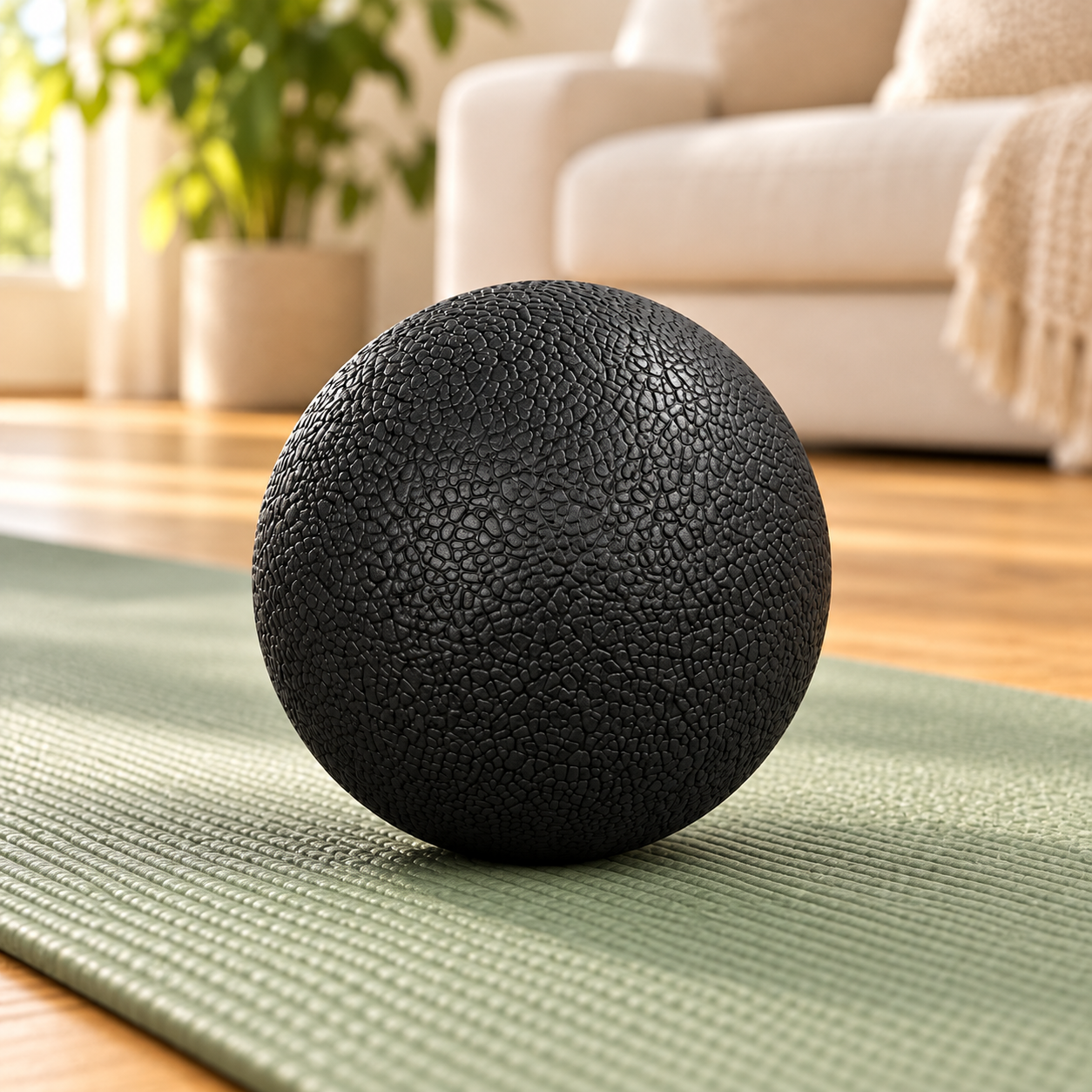
Watch out: a tool that feels good on the upper back can be far too intense on the neck or over the shins, so test any new tool on a large muscle first and reduce pressure before moving to a sensitive area.
The main tool types and what each one suits are summarised below.
| Tool | Best for | Key difference |
|---|---|---|
| Massage ball | Upper back, shoulders, hips | Silent, pocket-sized, no power needed |
| Peanut-shaped ball | Muscles beside the spine | Groove avoids pressing directly on the spine |
| Foot roller or fascia wheel | Feet during seated breaks | Works the sole while seated |
| Acupressure mat and pillow | Evening wind-down | Spreads pressure over a larger area |
| Manual hand tool or grip aid | Forearms, hands, wrists | Small, cheap and easy to keep on the desk |
Best Neck Massager for Desk Work: What to Look For
When you compare neck massagers for desk work, look at firmness, size, and how easily you can control the pressure yourself. Neck tissue is sensitive, so a tool that feels comfortable on the upper back may be too much for the front or sides of the neck. Choose something you can hold steady and adjust without twisting your arm awkwardly.
Pay attention to where the tool needs to rest. A pillow suits neck support during rest, but it does not replace a targeted tool for an active tight spot. A small ball can be pressed gently against the upper shoulder while you sit, keeping clear of the throat.
Stop if anything feels uncomfortable. Neck tension that persists, spreads into the arms, or comes with headaches or numbness is a reason to speak with a suitable health professional rather than keep massaging.
Massage Gun for Neck and Shoulder Tension: Is It Right for You?
Massage guns deliver fast, percussive pressure, which some people find helpful for large muscles in the shoulders and upper back. A short session can be done in a couple of minutes.
For the neck, though, a massage gun is rarely the best first choice. The front and sides of the neck sit close to the carotid arteries, the windpipe and sensitive nerve structures, and a powerful device is hard to control precisely when you are holding it at an awkward angle. The muscles at the base of the skull and along the top of the shoulder are also thin enough that percussive force travels further than you intend.
If you do want to try a gun on the shoulders, a few practical rules reduce the risk. Use the lowest speed setting and the softest head attachment. Keep the device on the meaty part of the upper shoulder and the shoulder blade, and keep it off the front and sides of the neck, the spine itself, and any bony point. Limit sessions to a few minutes per area and let the tool do the work rather than pressing it in. Stop if you feel tingling, numbness or dizziness.
Watch out: a massage gun is not a substitute for assessment if neck tension spreads into the arms, comes with headaches, or is accompanied by numbness or weakness, those patterns warrant a conversation with a suitable health professional rather than more massage.
It also helps to be realistic about what any percussive tool can do. Massage may temporarily reduce the feeling of tightness, but it does not correct posture or fix the desk setup that created the tension in the first place. The strongest routine pairs a short, gentle session with the workstation changes covered below, so the tension has less chance to rebuild the next day.
Many desk workers get better results from a gentler, hand-held tool they can control precisely, a small ball or a manual roller, because the pressure is limited by their own hand and the tool can be used quietly at the desk without charging, noise or setup.
Massage Ball for Upper-Back Tightness and Other Body Areas
A massage ball is one of the simplest ways to ease upper-back tightness at a desk. Place it against a reachable shoulder area while seated or lying on a firm surface, and apply only comfortable pressure. The Peanut Massage Ball High Density Lightweight Fitness Body Massage Yoga Exercise Relieve Pain suits this use, and its compact size means you can keep it at your desk.
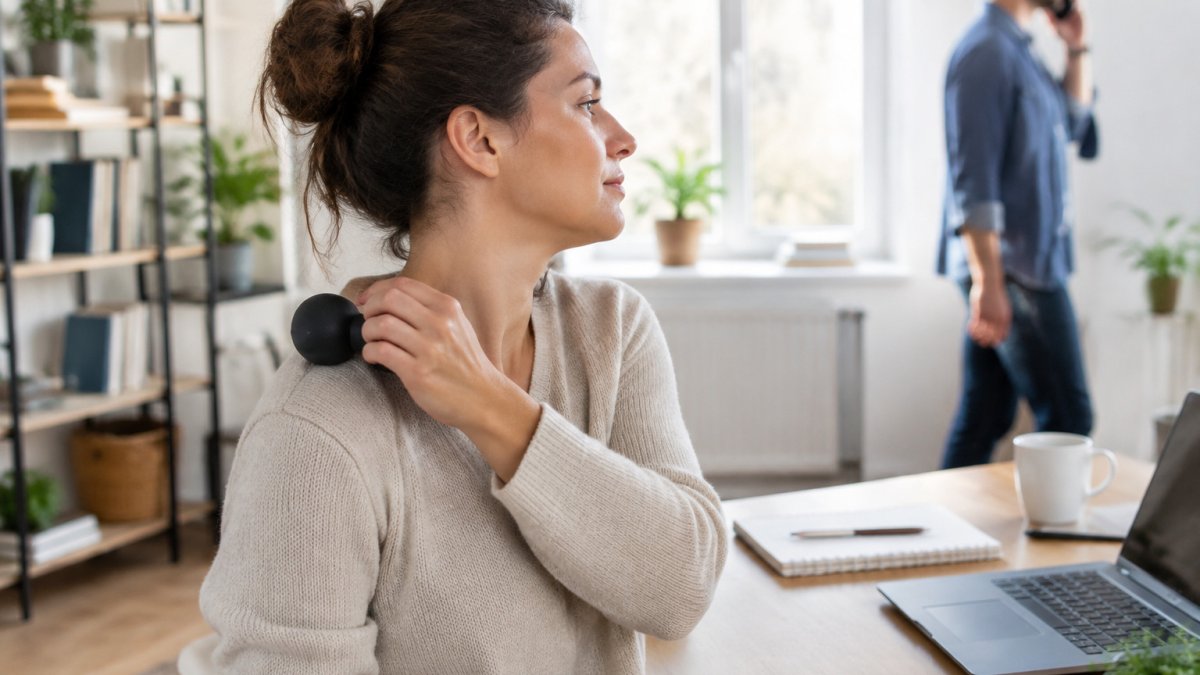
Many people also use a ball for the lower back and hips. Use light hand-held contact over the outer hip, away from bone. For the feet, roll it lightly beneath the sole during a brief seated break.
A common mistake is pressing too hard and too long. Short, gentle sessions usually feel better than a single intense one. If a spot still feels sore the next day, reduce the pressure.
Desk Setup for Neck Pain: Fix the Cause Before the Tool
A massage tool can ease symptoms, but it cannot correct a desk that puts your neck and shoulders under strain. Start by checking your screen height. The top of the screen should sit roughly at eye level so you do not tilt your head down for long periods. Keep the keyboard close enough that your elbows stay near your sides.
Support for the wrists and hands also matters. The Desk Comfort & Grip Bundle adds cushioning around the keyboard and mouse plus a grip ring for hand exercises between tasks. Use it to support your desk routine rather than as a fix for neck pain on its own.
Set a reminder to stand, stretch, and change position every hour or so. Small, regular breaks often do more for desk tension than any single session with a tool.
Booking Your Next Step: Choosing a Movecraft Tool for Your Desk Routine
Start by deciding which body area bothers you most. Shoulders and upper back suggest a massage ball. Feet suggest a roller. Evening wind-down suggests a mat and pillow. If you want a single purchase covering more than one area, the Acupressure & Massage Bundle combines a mat, pillow and compact massage ball for $79.99 AUD.
Check the size and fit of each item before you buy. Measure your floor space for the mat, and confirm the ball suits the area you plan to use it on. Use each tool according to its own instructions, and stop if anything feels uncomfortable.
If your tension is ongoing, worsening, or comes with jaw locking, persistent pain, or other new symptoms, speak with a suitable health professional. Tools can support a comfortable routine, but they do not replace proper assessment.
Frequently Asked Questions
What massage tool is best for desk-related neck and shoulder tension?
For most desk workers, a handheld massage ball or a neck-focused massager suits short breaks best because it lets you control pressure yourself. The right choice depends on where the tension sits and how much pressure you are comfortable with. Movecraft's Peanut Massage Ball is priced at AUD 22.00. Stop if anything feels uncomfortable, and avoid pressing near the throat.
Do massage guns help with tension from sitting at a desk?
Massage guns deliver percussive pulses that some people find helpful for tight neck and shoulder muscles after long periods seated. They are powerful, so start on a low setting and use short sessions. Because intensity can be hard to judge over bone or on a sore spot, many desk workers prefer a gentler tool for daily use. Individual results vary.
Are massage balls or foam rollers better for upper-back tightness?
A massage ball is usually easier to position on the upper back and shoulders while seated, since you can lean it against a wall or chair. Foam rollers cover more area but are harder to use at a desk and need floor space. For a short break at work, a compact ball is the more practical option.
When should I seek professional advice for persistent neck or back pain?
See a suitable health professional if pain persists, worsens, spreads down an arm or leg, or comes with numbness, weakness or jaw locking. Self-massage tools are for comfort and short-term relief, not a diagnosis or treatment of an underlying condition. A GP or physiotherapist can assess whether a tool is appropriate for your situation.
