

5 Ways to Fix Lower Back Stiffness Fast
Last Updated: November 11, 2026
Quick Summary
Lower back stiffness usually eases with frequent movement breaks, gentle stretching, and better sitting habits. Stand up or change position every 30 to 45 minutes, and do a short stretching routine once or twice daily. See a doctor or physiotherapist if pain lasts more than a few weeks.
- Stand up or change position every 30 to 45 minutes.
- Do the stretching routine once or twice daily, ideally after a walk or warm shower.
- Build the stretches over three weeks, starting with one repetition per side.
- Stop any movement that sharpens pain or causes numbness down the leg.
- Seek professional advice for pain lasting over a few weeks or waking you at night.
Table of Contents
- Why Your Lower Back Gets Stiff and What Usually Helps
- Step-by-Step Lower Back Stiffness Stretches to Try at Home
- Tight Lower Back Exercises and Movement Breaks for Desk Workers
- When to Seek Help for Lower Back Stiffness and Next Steps
- Frequently Asked Questions
Why Your Lower Back Gets Stiff and What Usually Helps
Lower back stiffness after a long desk day is a common complaint. Sitting still for hours shortens the hip muscles, and by mid-afternoon the dull, heavy feeling builds. Simple habits often ease it.
Stiffness usually builds from three things: sitting still too long, a chair that does not support your natural curve, and too few movement breaks. Safe Work Australia guidance on sedentary work and musculoskeletal health
- Stand up or shift position every 30 to 45 minutes
- Keep your lower back supported with a cushion or chair back
- Keep your feet flat and hips level with your knees
- Take a short walk at lunch to loosen your hips
Watch out: sitting in one slumped position all afternoon can irritate the lower back even with a comfortable chair. Change posture often rather than holding one "perfect" one.
Step-by-Step Lower Back Stiffness Stretches to Try at Home
Gentle stretching loosens a stiff lower back, but order and intensity matter. Do this routine once or twice daily, ideally after a short walk or warm shower when tissues are more pliable.
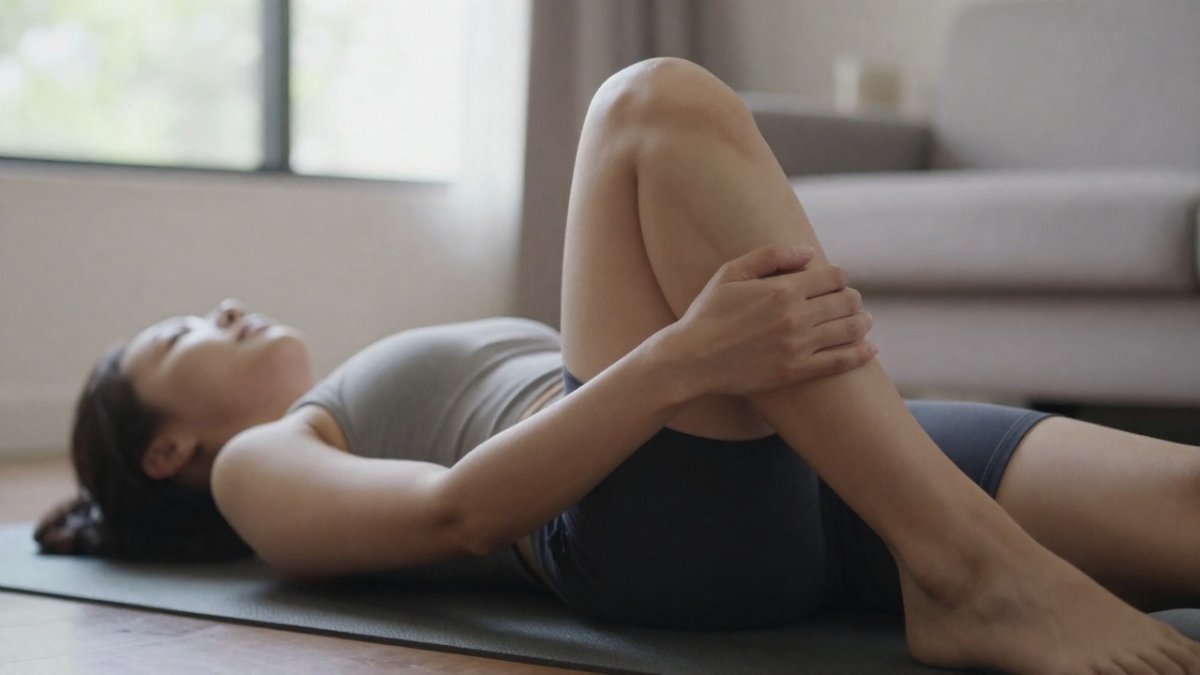
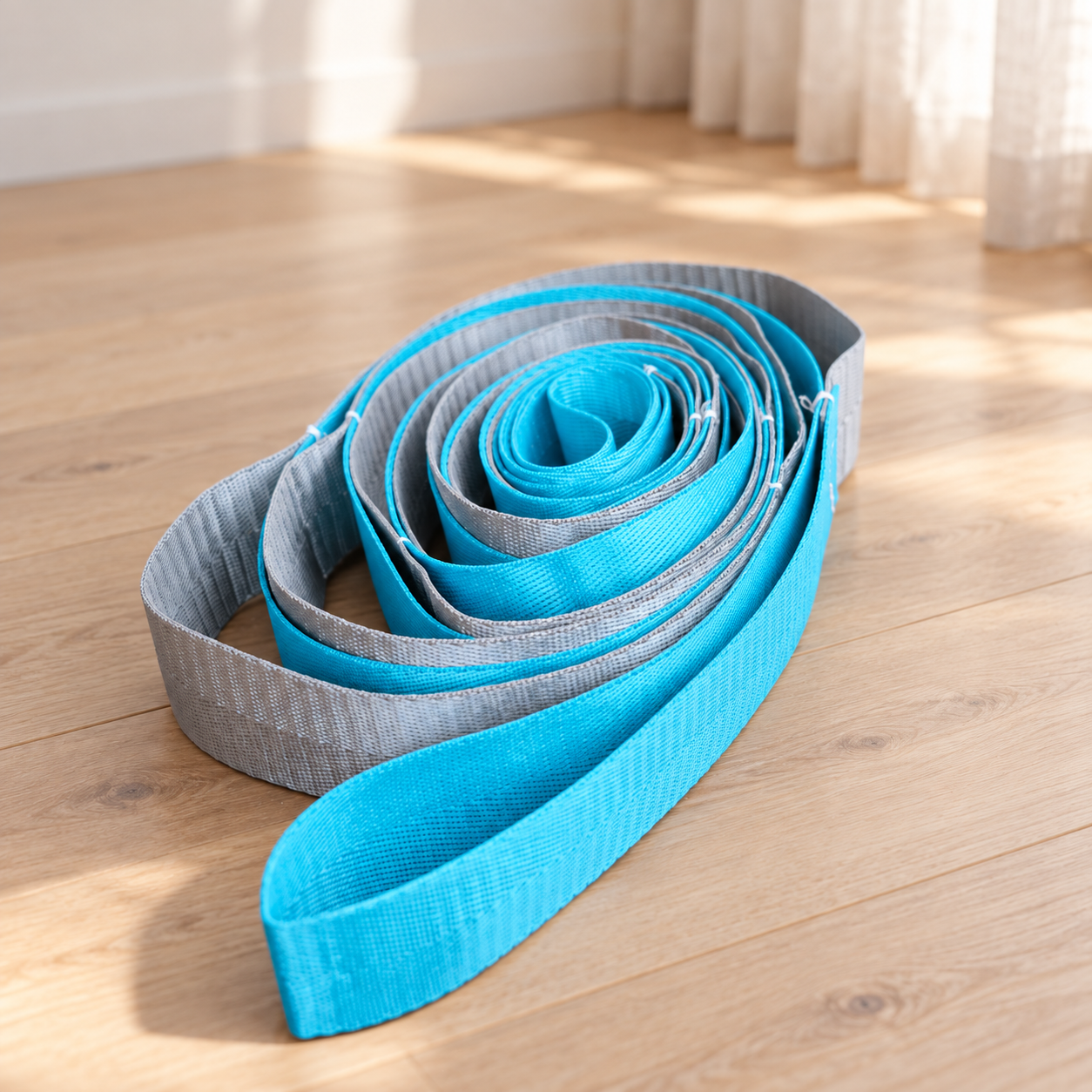
Lie on your back with knees bent and feet flat. Slowly draw one knee toward your chest, keeping the opposite foot down, and hold 20 to 30 seconds, breathing out as you ease in. Repeat two to three times per side, then bring both knees to your chest together for another 20 to 30 seconds. A stretch belt such as the Multi-loop Non-elastic Yoga Stretching Training Belt can help you hold a gentle position while breathing, without pulling further than is comfortable.
From the same position, let both knees fall gently to one side with shoulders on the mat. Hold 20 to 30 seconds, then repeat to the other side.
Finish by moving into child's pose, sitting your hips back toward your heels with your arms extended. Stay for 30 to 60 seconds, letting your breathing slow the back muscles.
Build over two to three weeks. Week one: each stretch once per side, once or twice daily. Week two: two or three repetitions per side, holds nearing 30 seconds. Week three onward: add the child's pose hold and stay consistent rather than chasing deeper stretches.
Stop if a stretch sharpens pain, sends pain or tingling down your leg, or leaves you stiffer the next morning. A mild pull is normal; sharp pain is not. Reduce the range or place a folded towel under the knee. If symptoms persist beyond a few weeks, see a doctor or physiotherapist first.
Watch out: forcing a deep twist or pulling the knee hard toward the chest can strain the lower back. Move slowly and let the stretch come to you.
The article lays out a stretching routine that builds over three weeks, summarised below.
| Week | Repetitions | Hold time |
|---|---|---|
| Week one | Each stretch once per side, once or twice daily | Not stated |
| Week two | Two or three repetitions per side | Nearing 30 seconds |
| Week three onward | Stay consistent; add child's pose hold | 30 to 60 seconds for child's pose |
Tight Lower Back Exercises and Movement Breaks for Desk Workers
Lower back stiffness often comes from holding one posture for hours, not a single bad position. Movement breaks restore blood flow to the back and hip muscles. Aim for frequent, short movement rather than one long workout.
Stand up or change position every 30 to 45 minutes; each break can take just two to three minutes. Seated pelvic tilts are a good start: sit tall and slowly rock the pelvis forward and back, 10 slow repetitions, moving the lower spine without leaving your chair.
When you can stand, a standing back extension helps counter the forward-flexed posture of desk work. Place your hands on your lower back and lean back gently, 5 repetitions, stopping well short of any pinching. Follow with a hip-flexor stretch in a half-lunge, holding 20 seconds each side, since tight hip flexors pull the pelvis forward and load the lower back.
Small self-massage helps during a seated break. A Peanut Massage Ball can be used for light hand-held contact over the outer hip, and a long resistance loop band can support gentle movement during a break. Keep pressure moderate and avoid pressing on the spine.
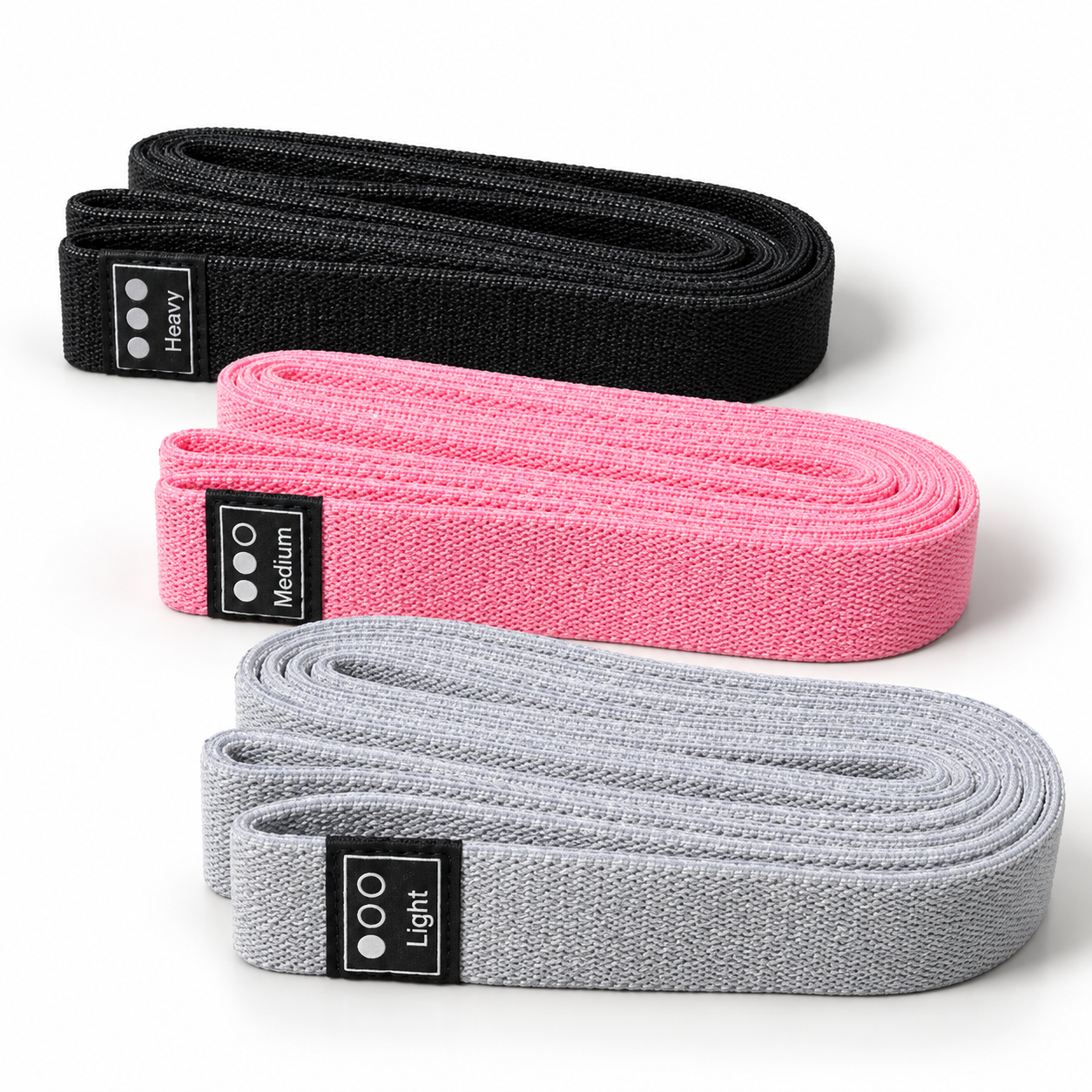
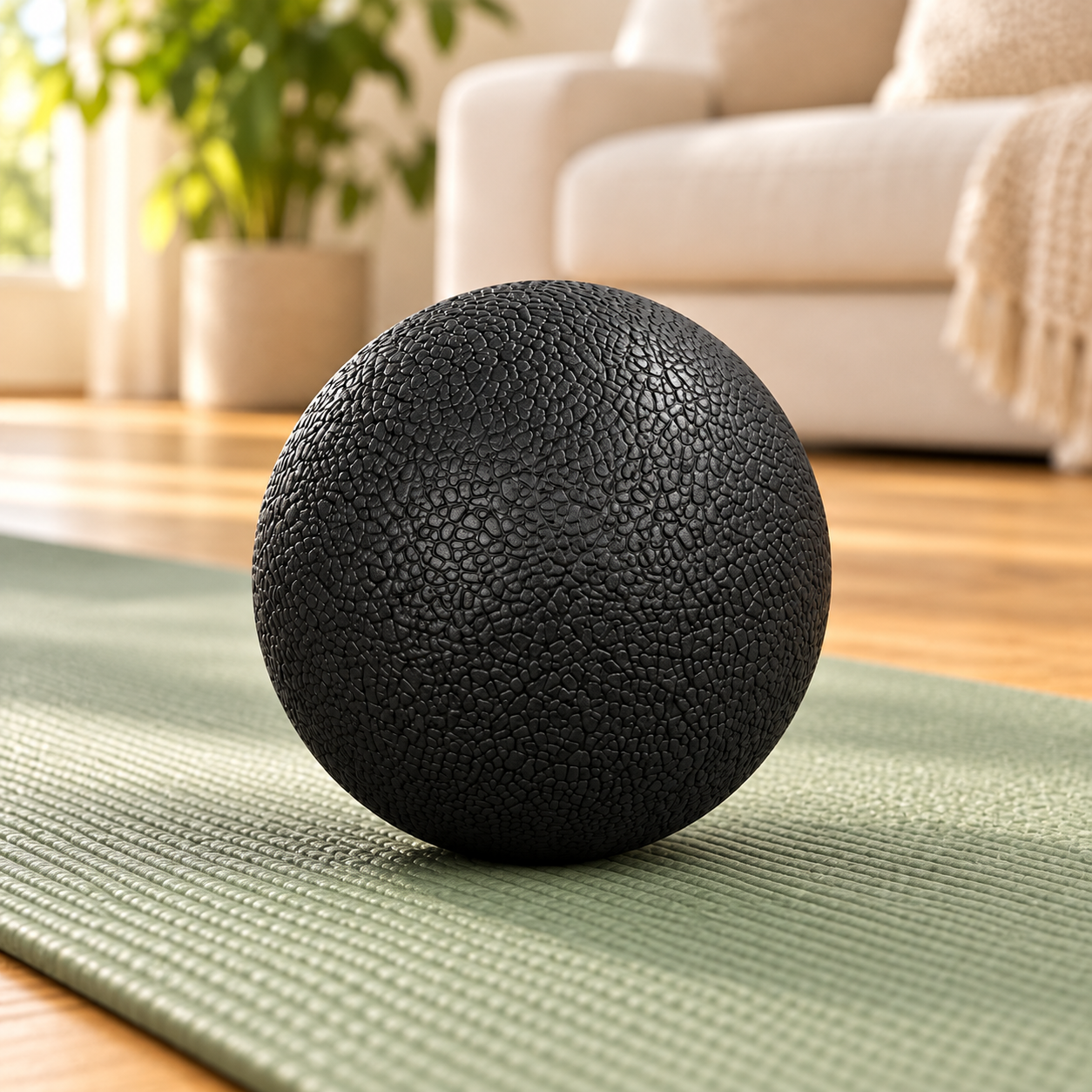
A workable week: a five-minute walk every hour, seated tilts at each sitting break, and the standing extension and hip stretch at lunch.
Stop any movement that sharpens pain, causes numbness or radiates down a leg. Reduce the range or switch to a gentler version, and seek professional advice if the discomfort persists or returns each day.
Watch out: a chair that forces slumping is a bigger problem than any single exercise. Move frequently and treat breaks as a way to change posture, not a reason to hold one position longer.
When to Seek Help for Lower Back Stiffness and Next Steps
Many people find lower back stiffness eases with movement and simple stretching. Seek professional advice for pain lasting over a few weeks, pain that wakes you at night, leg numbness or weakness, or pain after an injury, and speak with your doctor or physiotherapist before starting new exercises in those cases.
Start with one or two changes this week, such as an hourly movement break and a short stretch before bed. Build from there and notice what helps. Explore the Movecraft range for tools that suit your routine.
Ready to ease desk stiffness? Explore Movecraft's stretch and mobility range and build a routine that fits your day.
Frequently Asked Questions
How do you loosen a stiff lower back?
Start with gentle movement rather than rest. Lie on your back with knees bent, then slowly draw one knee toward your chest and hold for 20 to 30 seconds before switching sides. Follow with a seated or lying trunk rotation and a child's pose. Move within a comfortable range, breathe steadily and stop any movement that sharpens the discomfort. Repeating this two or three times a day, with short walks in between, can help many people manage stiffness.
Why is my lower back stiff after sitting?
Prolonged sitting keeps the hip flexors and the muscles around the lumbar spine in a shortened position for hours. When you stand up, those tissues have to lengthen again, which can feel like tightness or stiffness. Taking a movement break every 30 to 60 minutes, standing up to walk briefly and doing a few gentle lower back stiffness stretches at your desk can reduce how stiff you feel when you get up.
When should I see a doctor for lower back stiffness?
See a doctor or physiotherapist if the stiffness lasts longer than a few weeks, does not improve with gentle movement, or comes with leg numbness, weakness, tingling, pain at night, fever, unexplained weight loss, or loss of bladder or bowel control. These signs can point to something that needs assessment rather than stretching. A clinician can check whether the stiffness is a simple muscular issue or something that needs a different approach.
